
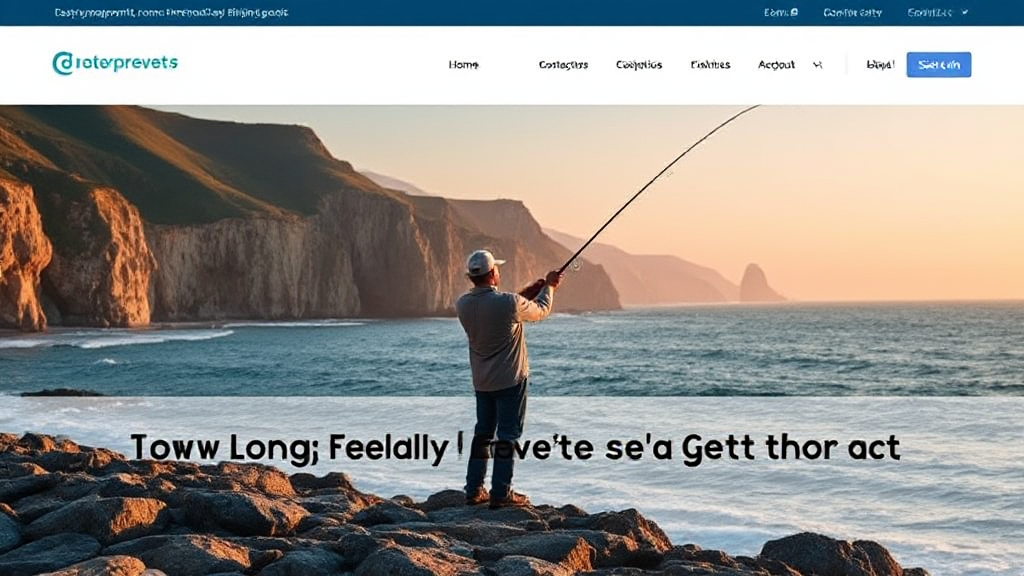
How Long It Really Takes to Get Portugal Fishing Right: 7 Mistakes That Cost You a Session
Most guides to portugal fishing start with the fish. They list species, rods, baits, and the prettiest cliffs on the west coast. Almost none of them start with the thing that actually decides whether you get a line in the water at all: the paperwork and the timing around it. I have watched people drive three hours to a rock mark near Sagres, rig up, and then spend the whole morning on a phone trying to sort a licence they should have had before breakfast. That is the gap this article fills. This is my own routine, the mistakes I made early on, and the order I now do things in so a fishing day stays a fishing day.
1. Booking the trip before you understand the licence rules
The first mistake is sequencing. Anglers plan the flight, the rental car, the accommodation, and the tackle list, then treat the licence as an afterthought. In mainland Portugal, recreational sea fishing from shore or boat requires a DGRM recreational sea fishing licence, and it is not the kind of thing you want to discover at 6 a.m. on a Sunday. The rule is simple: the licence comes first, the trip comes second. If you are travelling, sort it before you leave home, because a stable internet connection and a working payment method matter more than a scenic cliff-top signal.
My routine now is to apply the same week I book flights. It takes about three minutes through a service like easyfishingpermit, no NIF and no government portal login required, and you can pay with card, Apple Pay, or Google Pay. That single habit removed the most stressful part of every trip I have taken since.
2. Assuming one licence covers every kind of water
The second mistake is treating Portugal as one fishery. It is not. You have the open Atlantic coast, the sheltered Algarve bays, the estuaries, the reservoirs, and the rivers, and the rules that apply to a sea mark do not automatically apply to a freshwater lake an hour inland. A recreational sea fishing licence for mainland Portugal is exactly that: sea fishing. If your plan includes a day on a river or a reservoir, check the separate requirements rather than assuming your sea licence travels with you.
I keep a short note on my phone for each trip: which day is sea, which day is inland, and what each one needs. It sounds fussy. It has saved me twice, once on a Douro tributary and once on a brackish stretch where I genuinely was not sure which category applied. When in doubt, ask before you cast, not after.
3. Ignoring the difference between shore, boat, and spearfishing categories
This is the mistake that catches experienced anglers, because they assume experience substitutes for reading the form. Shore angling, boat angling, and spearfishing are not always interchangeable in how they are recorded, and the category you select should match what you are actually going to do. If you tick the wrong box because it looked cheaper or simpler, you have not saved money; you have created a problem.
My approach is to decide the exact activity for each day first, then match the licence to it. If I am fishing from a charter out of Peniche on Tuesday and casting from rocks near Ericeira on Wednesday, I know both before I open any application. This is also where a proper fishing license application beats guesswork, because you are choosing a defined category rather than interpreting a dense form in a second language.
4. Leaving the licence to the last morning
The fourth mistake is pure optimism. People believe the licence will take five minutes at the harbour, or that someone at the marina will sort it, or that nobody checks. None of those are plans. Even a fast online process needs a charged phone, a working payment method, and a moment of quiet. Doing it at the trailhead with cold hands and a rod already rigged is how small problems become lost mornings.
Here is my actual routine, in order:
- Confirm the dates and the regions I will fish.
- Decide shore, boat, or both, day by day.
- Apply online and pay immediately, so the confirmation is in my inbox before I pack.
- Screenshot the confirmation and save it offline.
- Keep a printed copy in the tackle bag as a backup.
That is it. The whole thing takes less time than spooling a reel, and it means the first cast of the trip is a cast, not a phone call.
5. Misreading the coast, the swell, and the access
Now the fishing itself. The fifth mistake is treating the Portuguese coast as a single environment. The west coast is exposed, powerful, and often unfishable when the swell is up. The Algarve is gentler but crowded in season. Estuaries fish differently again, with tides that matter more than wind. Anglers who arrive with one plan and one rig get skunked; anglers who arrive with three options usually find fish somewhere.
My habit is to check swell, wind, and tide the night before and again at first light, then pick the mark that suits the conditions rather than the mark I saw on social media. If the west coast is pumping, I go sheltered. If the wind is offshore on the south coast, I fish the early window and get off the rocks before it turns. Knowing when not to fish is a skill, and it protects both your catch rate and your safety.
Safety deserves its own line here. Rock marks in Portugal are beautiful and genuinely dangerous. Never fish a ledge you cannot retreat from, never turn your back on the Atlantic, and never fish alone on an exposed point. The fish are not worth it, and the locals will tell you the same thing.
6. Packing for the wrong Portugal
The sixth mistake is a tackle and clothing mismatch. People pack for a postcard and fish in a wind tunnel. The Atlantic coast can be cool and brutal in the morning and warm by noon, and the sun reflects off the water all day. Layers, a windproof shell, polarised sunglasses, and a headlamp for dawn starts are not optional extras. Neither is a decent pair of boots with grip, because wet rock does not care how good your rod is.
On tackle, I keep it lean: a versatile spinning setup, a heavier rod for rough ground, a small box of lures and weights, and enough terminal tackle to re-rig without opening three bags. The species range from bass and bream to mackerel, and a simple, adaptable kit handles more of them than a specialist box you barely understand. Buy bait locally when you can; the tackle shops know what is working this week, which is information no forum can match.
This is also where fishing in portugal rewards preparation over gear. The anglers catching consistently are not the ones with the most expensive reels. They are the ones who read the water, moved twice before lunch, and had their paperwork sorted so they could actually stay out.
7. Treating the rules, the locals, and the catch as optional
The seventh mistake is the one that gets anglers into real trouble. Size limits, bag limits, and seasonal closures exist for a reason, and they change. Protected areas and marine reserves are not suggestions. If you keep a fish you should not have kept, or fish a zone you should not be in, you are not being clever, you are being the reason the rest of us get stricter rules.
My closing routine is short and I do it every time:
- Licence confirmed and saved offline before I leave.
- Category matched to the day’s actual fishing.
- Swell, wind, and tide checked the night before and again at dawn.
- Two backup marks chosen, not one.
- Size and bag limits checked for the species I expect.
- Layers, grip, light, and water in the bag.
- Leave-no-trace: line, packaging, and bait bags go home with me.
None of this is glamorous, and none of it replaces local knowledge or a good guide. But it is the difference between a trip where you fish and a trip where you manage problems. Sort the licence early, match it to what you are actually doing, read the coast honestly, and pack for the weather you will get rather than the weather in the photo. Do that, and Portugal stops being a logistical puzzle and becomes what it should be: a long coastline, a lot of fish, and a day that belongs to you.
Leave a Reply